
Task 1: Identifying Horses
During this task you will learn about horses’ size, colour, markings and body condition score to identify specific horses in the stable.
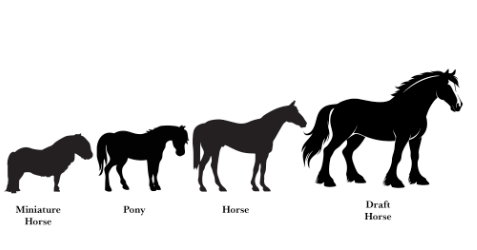
Horses under 146cm are called ponies. Horses over 147cm are called horses.
Ponies under 86cm are called miniature ponies, and large horses that are very heavy in their body are called draft horses.
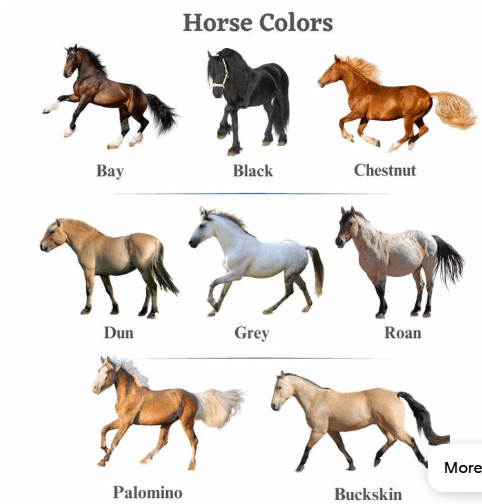
Horses have various coat colours.
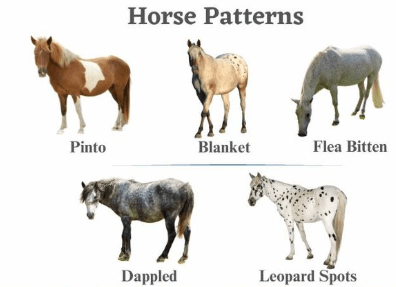
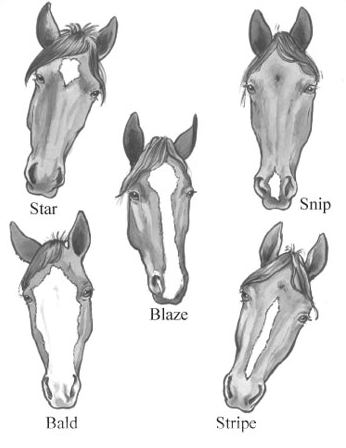
Horses have different leg and face markings.

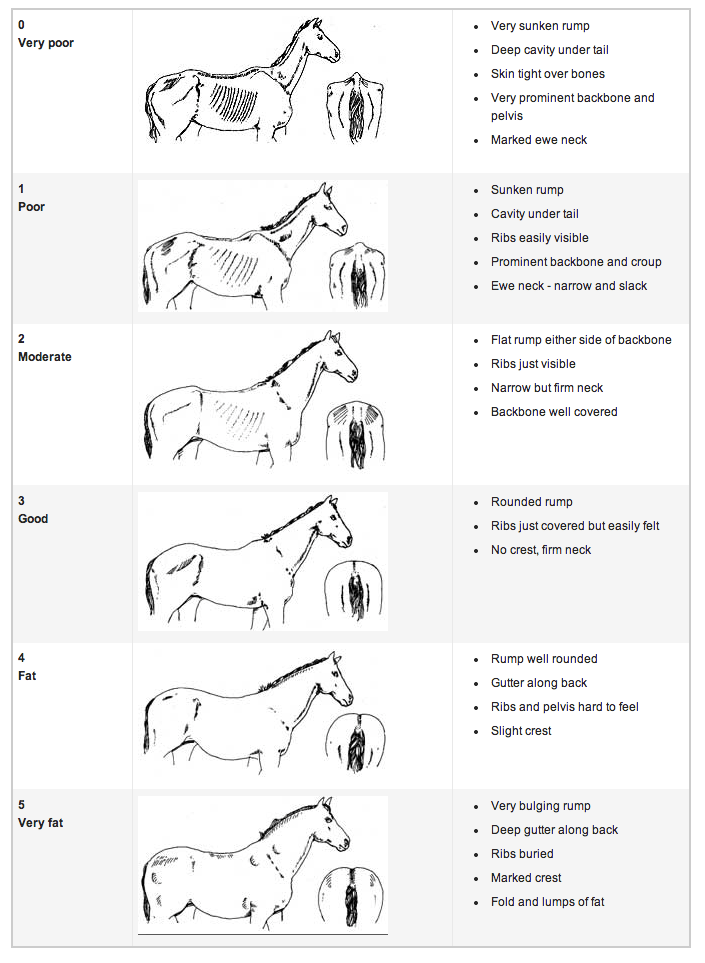
Depending on the horse’s feeding programme, exercise and wellness, its weight can differ by many kilos. To identify weight issues in horses we have the Horse Condition Scoring System.
Task 2: Handling the Horse
We use a headcollar to manage a horse. This equipment is placed on the horses head and allows us to move the horse under our control.
When we lead the horse we walk at the shoulder on the left side. This is the safest place to work with the horse as it has the most difficulty in moving sideways.
When we turn the horse we turn it away from us.
We can move the horse from left to right by gently pushing the hip area in the direction we want to move.
Task 3 Anatomy & Saddle Fitting
It is important to understand the anatomy of the horse for many reasons, these include:
- Identifying any injuries
- Understanding his strengths and limitations
- Checking for any changes which might impact health/fitness
- Addressing issues before they arise
Here in the UAE most saddles do not fit the horse they are used on. When the saddle does not fit well it causes pain which in turn causes:
- The horse does not want to work
- The horse behaves dangerously when asked to work
- The horse’s performance drops
- The horse moves poorly and can appear lame
There are 5 main points to basic saddle fitting, these are:
- The saddle should not reach further back than the last rib on the horse.
- The saddle should allow 4 fingers between the front of the saddle and the horses back
- The saddle should sit behind the shoulder bone (scapula)
- The saddle should sit along the horses back muscles and not touch the spine
- The saddle has even/equal contact on the horse with no pinch points or gaps
This is a very basic overview to identify significant issues, it is always best to have a saddle fitter come to measure your horse accurately for the best possible comfort and performance.
Signs a horse has had a poor saddle fit in the past:
- White hairs
- Atrophied muscles under the saddle
- Aggression and or movement when putting saddle on.
Task 4: The Signs of Health and Illness
Just like people, horses have several vital signs which allow us to understand if they are well or ill. These include:
| Test | Details | Normal Range |
| Dehydration: | Pinch the horse’s skin on the neck area and then release. | When you release the skin it should spring back into shape, if it remains raised the horse is dehydrated. The more raised- the more dehydrated. |
| Pulse: | Find pulse behind left elbow, count for 20 seconds and x by 3 for heart rate. | Between 28 and 44 beats per minute is normal. |
| Capillary Refill: Circulation and dehydration | Press on the horse’s gum for a few seconds – it will turn white- then release. | The pink colour should return in 2 seconds or less. |
| Temperature: | Lift the horse’s tail and insert the thermometer 3 to 5cm into the horse’s anus. Hold until it beeps | Normal temperature should be between 37.5 and 38.5. |
| Gut Sounds | Place your hand around the rear end of the stomach and feel/listen for long, slow regular gut sounds. | If there are no sounds or the sounds are too fast and aggressive, the digestive process should be investigated. |